
A Year On From The Plating Gym Kickstarter
Almost a year ago, I launched the Kickstarter for The Plating Gym.
I say that quite casually now, but at the time it felt like a much bigger thing. I had never run a Kickstarter campaign before. I had never written a proper book before, apart from a couple of photography books, which were image-led. I had never designed a book layout from scratch, dealt with printers in this way, organised fulfilment, or worked out how to ship something to people around the world.
So, looking back, I probably had no idea what I was getting myself into.
But I did know that I cared about the idea.
The Plating Gym came from years of looking at food through a camera, talking to chefs, making videos for Dining Fables, and slowly realising that plate design is one of those things a lot of people care about, but very few people are properly taught.
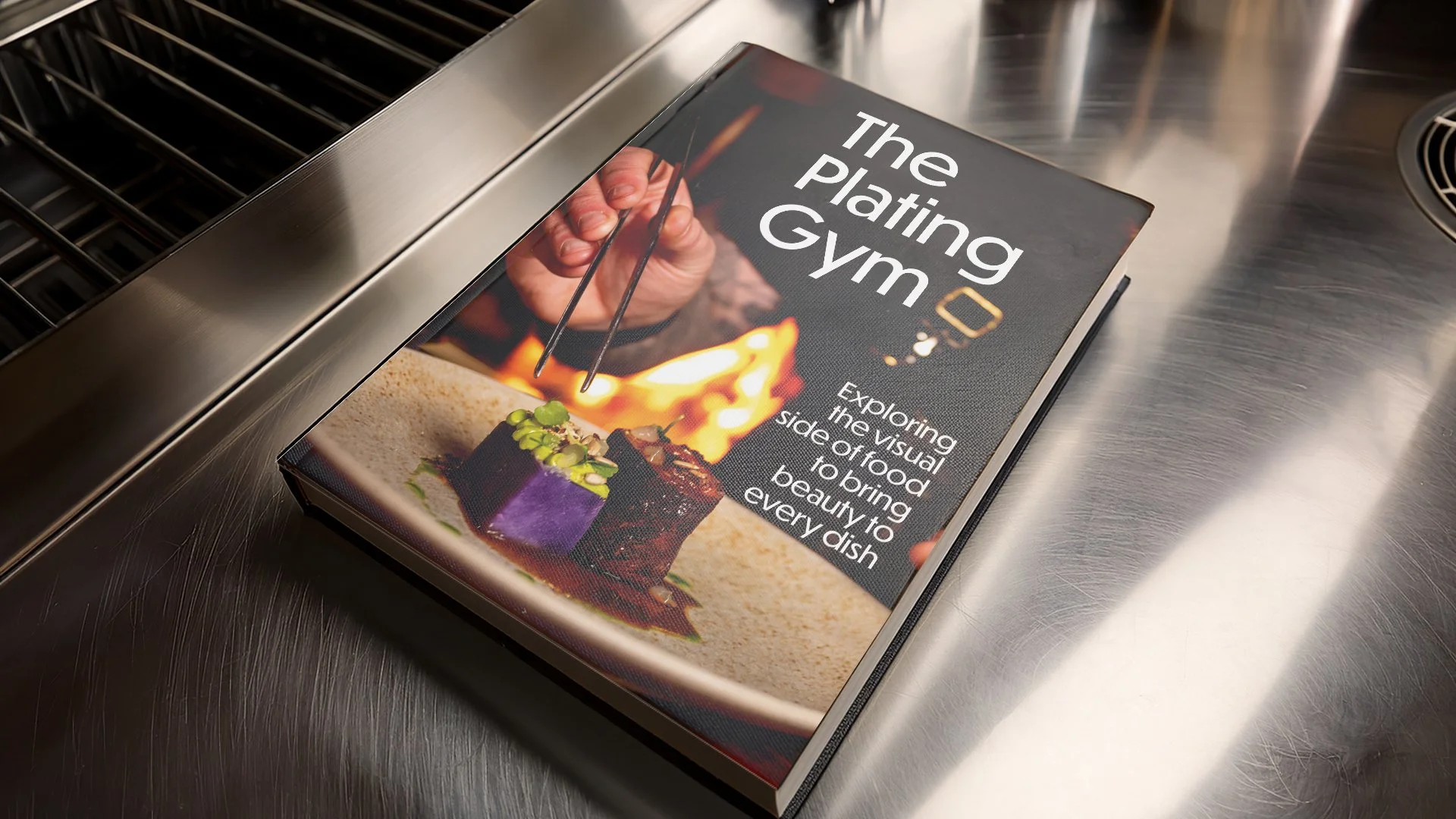
click on image to go to store
Most cooks know when a plate looks good. They can feel it. A dish lands in front of you and something about the colour, the space, the shape of the ingredients or the way the sauce sits on the plate just works. The harder bit is understanding why it works, and then being able to apply that to your own food.
That was the gap I wanted the book to sit in.
The idea didn’t arrive fully formed
The book didn’t appear as one neat idea. It came from lots of smaller thoughts that had been building up through the YouTube channel and the Food Envy Podcast.
I kept noticing the same thing. Chefs would talk about flavour first, which of course makes complete sense. But when they spoke about presentation, it was rarely just “make it look pretty”. They were thinking about how the dish would eat, where the diner’s eye would go, what the main ingredient was, whether the garnish had a purpose, whether the plate looked generous, precise, rustic, calm, dramatic or slightly chaotic.
As a food photographer, that side of food has always fascinated me. I spend a lot of time looking at plates before I photograph them, trying to work out what is pulling the eye in and what is getting in the way. Sometimes a tiny change makes a huge difference. A sauce moved slightly. A dark plate instead of a white one. A bit more negative space. A garnish removed rather than added.
The more I looked at it, the more I felt plating could be explained in a more practical way.
Not as a set of rigid rules, because that would be boring and probably useless, but as a set of visual principles that help you see the plate more clearly.
The bit I underestimated
The irony, of course, is that while I was trying to write a book about making plates look more considered, I was also trying to make a book look more considered.
And that was a whole new challenge.
Writing it was harder than I expected. I’m used to taking photos, making videos, talking through ideas, editing thoughts into something that works on screen. A book is different. You can’t rely on the pace of a video, music, examples flashing up on screen, or the natural energy of speaking. The writing has to stand on its own.
Then there was the layout. I had to think about how the book would feel in someone’s hands, how the pages would flow, where images should sit, how much text was too much, and how to make something educational without making it feel like a school textbook.
After that came the Kickstarter campaign, which was another learning curve entirely. Writing the campaign page, explaining the idea clearly, working out rewards, pricing, printing costs, postage, updates, fulfilment, and all the slightly less glamorous parts of making a physical product.
Then, once it was funded, I had to actually get the thing made and shipped.
That sounds obvious, but there is quite a big difference between having an idea for a book and having boxes of books that need to reach real people in different countries.
There were plenty of moments where I thought, “I definitely should have known more before starting this.” But I also think that is probably true of most projects worth doing. You start with the bit you care about, then the rest of it forces you to learn.
What I enjoyed learning
One of the things I’ve enjoyed most is realising how much you can learn when you actually need to learn it.
I didn’t become an expert (and I'm still not) in publishing, design, crowdfunding or fulfilment overnight, and I definitely made mistakes along the way. But each problem made me understand the project a little better.
How do I explain this book to someone who has never watched my channel?
How do I make the page layout feel clear without stripping out all the personality?
How do I keep the book useful for a home cook, but still interesting enough for chefs?
How do I talk about plate design without making it sound pretentious?
Those were the questions I kept coming back to.
And in a strange way, the process of making the book became very similar to the subject of the book. You start with an idea, you make a version, you look at what is working, you remove what is getting in the way, and then you keep refining it until it feels right.
What the book actually is
For anyone who doesn’t know much about it, The Plating Gym is a practical book about plate design and food presentation.
It isn’t a cookbook in the usual sense. There are no recipes to follow from start to finish. Instead, it looks at the visual side of food and asks how you can make better decisions when a mise en place reaches the pass.
The idea behind the title is that plating is something you can train.
Some people have a naturally good eye, of course, but I don’t think good plating is some mysterious gift that only a few chefs have. You can improve it by learning what to look for, practising small decisions, and getting better at noticing why certain plates work.
That might be colour, contrast, negative space, hierarchy, layout, balance or the relationship between the food and the plate itself. It might also be something much more practical, like setting up your plating station properly so you are not trying to make a beautiful dish while everything goes cold around you.
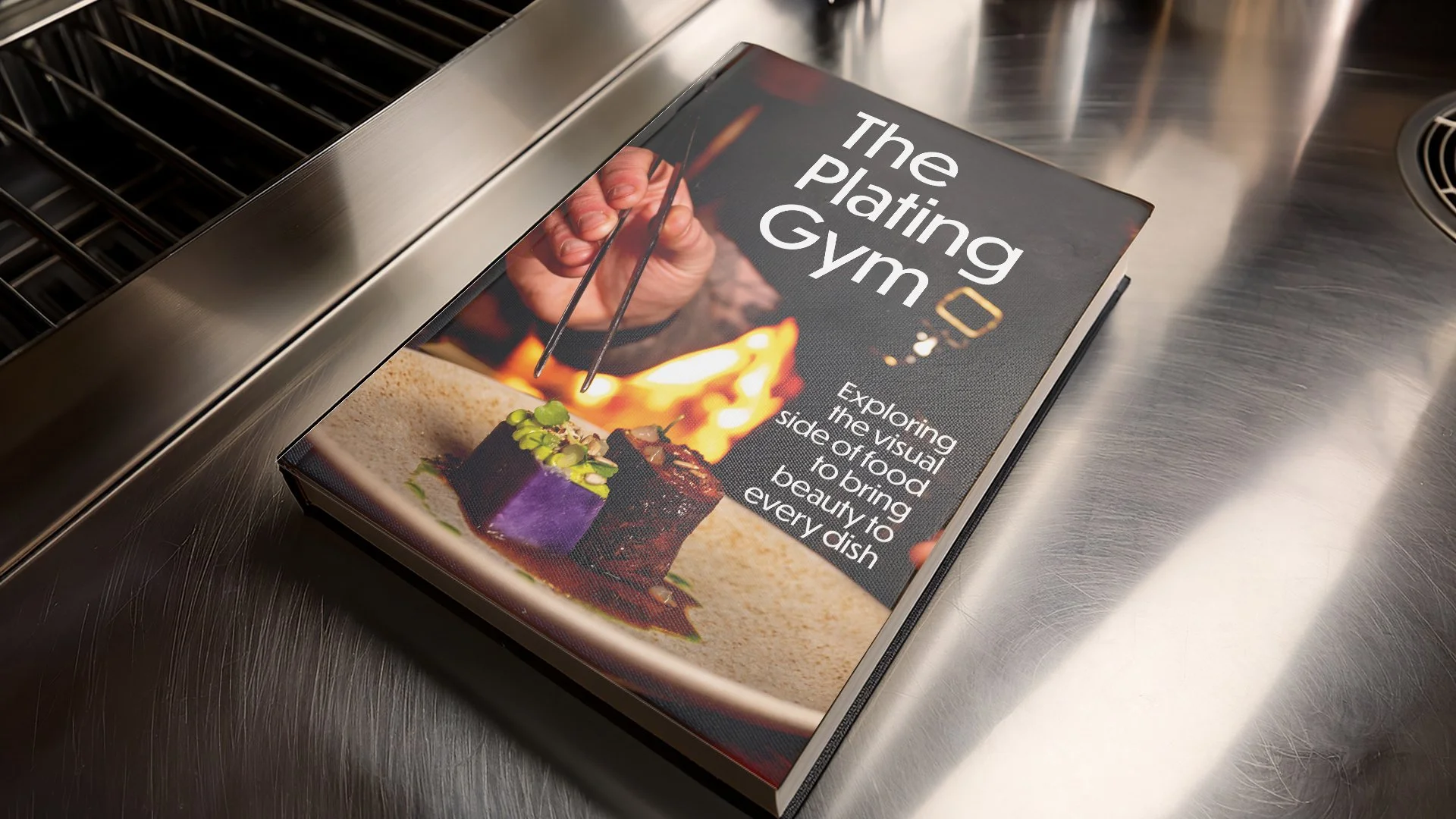
The Plating Gym Book is your practical, no-nonsense guide to mastering plate design, turning your dishes from “good” to “unforgettable.” Packed with frameworks, tips, and real-world examples, this book helps chefs and home cooks build confidence in plating so your food looks as good as it tastes—every time.
If you don’t see your location listed in the shipping section, please get in contact so I can try to arrange with my courier
To bring those ideas to life, combine it with The Plating Training Kit—a hands-on set of planning tools and worksheets built for real kitchens. Add both to your basket and 50% is automatically taken off The Plateist Training KIt at checkout, creating a complete learn-and-apply plating system.
Inside The Plating Gym
The book starts with why plate design matters in the first place, because presentation is often treated as decoration added at the end, rather than something that shapes how a dish is received.
From there, it moves into the design principles behind stronger plating: colour, layout, balance, composition, hierarchy, negative space and the idea that less can be more. I also talk about my S.L.I.C. framework, which breaks down plating layouts into stacked, linear, isolated and condensed designs.
There are practical sections too, including common plating mistakes, sketching your plate before you cook, choosing the right plate, using simple tools such as spoons, tweezers and squeeze bottles, and setting up your plating area so the final few minutes feel calmer and more controlled.
I also include the C.R.A.P. framework, which stands for Contrast, Repetition, Alignment and Proximity. It’s borrowed from design thinking, but adapted for the plate as a quick way to look at your own food and ask better questions about what is working and what needs changing.
The bit that made it real
The Kickstarter ended up being a success, which still means a lot to me. So for those who support it, thank you.
It was one thing to believe in the idea myself, but it was another thing entirely to see people back it, share it, comment on it, and trust that the finished book would be worth having.
Thankfully, the campaign was fully funded in less than 72 hours, which took away some of the fear that it might just quietly disappear. There was still a huge amount to do after that, but at least I knew the idea had connected with people.
Since then, The Plating Gym has sold over 250 copies across the physical and digital versions.
That number might not sound huge in the world of publishing, but for a self-published book about plate design, created off the back of a small YouTube channel and a very specific interest in the visual side of food, I’m genuinely proud of it.
More than anything, I like the thought that the book is out there being used. It might be sitting in a chef’s flat, a home kitchen, a restaurant office, or on the shelf of someone who simply wants to make their food look a bit better.
And that is really what I hoped the book would do.
I don’t want The Plating Gym to make everyone plate in the same way. That would be the opposite of the point. What I hope it does is help people look more carefully and give them a bit more language for what they are seeing.
Instead of just thinking, “This plate doesn’t look right,” I’d like someone to be able to ask whether the main ingredient is clear enough, whether the colours are fighting each other, whether the garnish is helping, whether the plate feels too crowded, or whether the dish needs a stronger focal point.
Once you can see those things, plating becomes much less mysterious. Still difficult, but less mysterious.
Where it has led
One thing I didn’t really expect was that finishing the book would give me more ideas, not fewer.
The Plating Gym has also helped shape the Plateist Training Kit, which is something I’d developed as a more practical companion to the book. If the book is there to explain the principles and help you understand plate design more clearly, the training kit is more about doing the work: exercises, prompts, worksheets and small drills to help you train your eye and practise the ideas in a more hands-on way.
I see them as complementary rather than the separate things. The book gives you the thinking. The training kit gives you somewhere to apply it.
And who knows what projects will come next. That has probably been one of the more unexpected parts of this whole thing. Once you start building around an idea you really care about, other possibilities begin to appear.
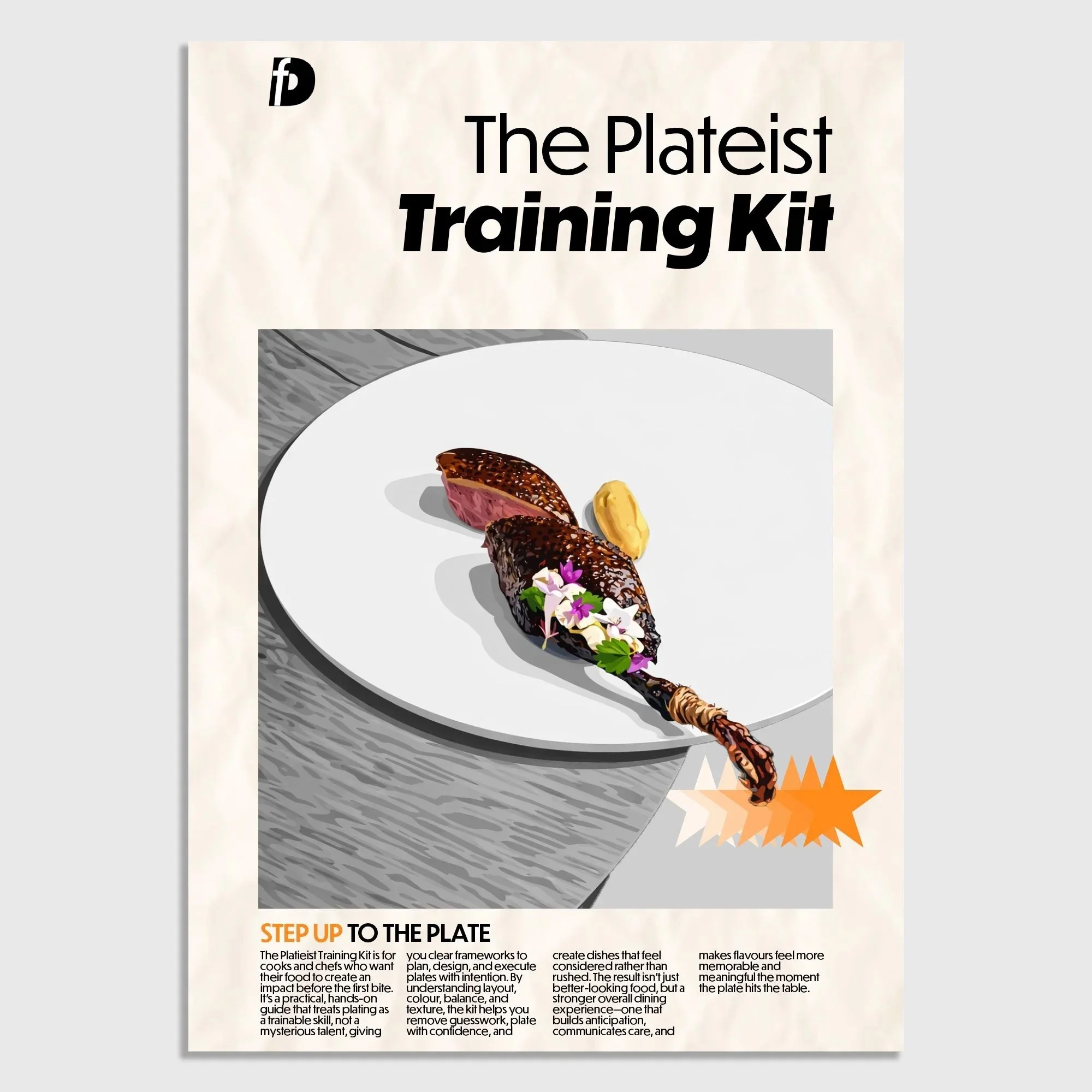
The Plating Training Kit is a practical, step-by-step collection of worksheets, planning tools, and visual checklists designed to help chefs and cooks design better plates with intention. It gives you a clear process for researching ideas, planning layouts, using colour and garnish purposefully, and critiquing your own work—so your food doesn’t just taste good, it looks considered, confident, and consistent.
If you want to understand the thinking behind these tools, bundle it The Plating Gym – Hardback or Digital Edition. When both are added to your basket, 50% is automatically taken off The Plateist Training KIt at checkout, making this the easiest way to learn the principles and put them into practice at the same time.
A year later
Nearly a year on from launching the Kickstarter, I mostly feel grateful.
Grateful that people backed it. Grateful that the book actually made it into the world. Grateful for all the chefs, cooks, viewers and podcast guests who helped shape the way I think about plate design.
I’m also glad I didn’t fully understand how much work it would be before I started, because there’s a chance I might have talked myself out of it.
But I’m very pleased I didn’t.
The book is still selling on my website a year later, and I couldn’t be happier with how it has gone. More importantly, I still think it has value for the people who find it, especially those who already care about food but want a clearer way to understand the visual side of what they are making.
The Plating Gym began as a book about improving the visual side of food, but making it taught me something broader than that. If you care about an idea enough, you can learn a surprising amount as you go. You won’t get everything right straight away, and there will be plenty of moments where you feel out of your depth, but that doesn’t mean you shouldn’t start.
Sometimes that is the only way the thing gets made.
And in this case, I’m very glad it did.