
Plate like Slop, it will taste like slop
Let me say something that might sting a little. If you plate slop, it will taste like slop.
I do not mean the flavour physically changes the moment it hits the plate. The seasoning is still the seasoning. The sauce is still the sauce. The work you put into the cooking is still there.
But before anyone picks up a fork, they have already started judging the dish. They have seen the shape of it, the way it sits on the plate, the colour, the mess around the edge, the sauce that has run where it was not meant to run. Their brain has already had a first impression.
And first impressions are annoyingly powerful.
As a food photographer for well over a decade, I have seen this so often that it has stopped being much of a surprise. A chef or cook will spend hours sourcing ingredients, prepping carefully, cooking something properly and getting the flavour right. Then, in the final few seconds, the food is dropped onto the plate as if that last moment somehow does not count.
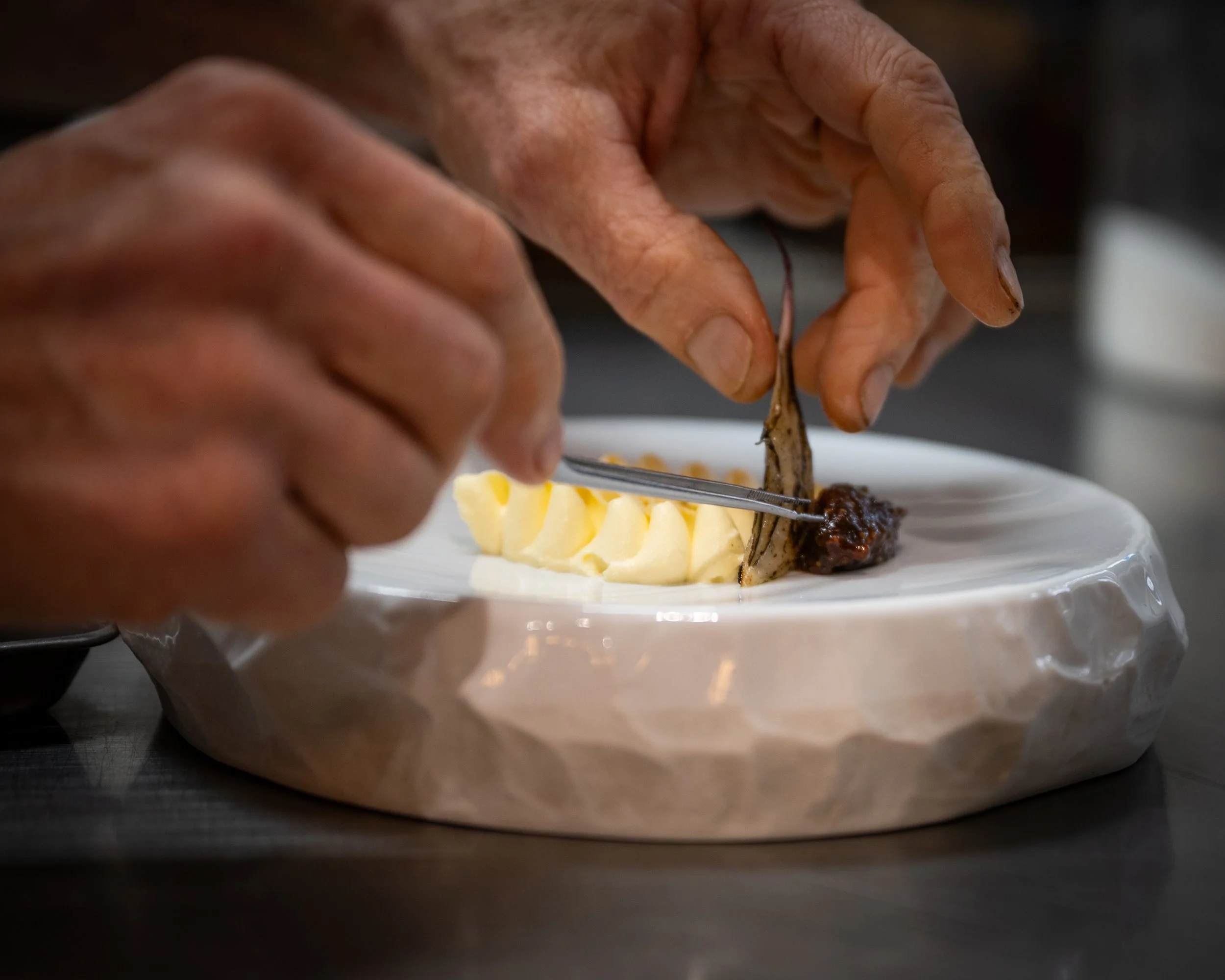
I find that strange, because it is the last thing the cook does, but the first thing the diner sees.
That does not mean everything needs tweezers, dots, foams and tiny flowers. In fact, I think a lot of plating becomes worse when it tries too hard to look like restaurant plating without understanding why those decisions are being made.
But there is a big difference between a plate that looks relaxed and a plate that looks like nobody cared.
That difference is intention.
Great chefs do not make things look effortless by accident
We often look at the best chefs it can be easy to assume their plates just happen.
You see a dish from someone like Massimo Bottura, Heston Blumenthal or Gordon Ramsay, and it can feel almost casual. The food looks natural, confident and unforced, as if they simply walked into the kitchen, placed a few things down and somehow arrived at something beautiful.
But I do not really believe that is what is happening.
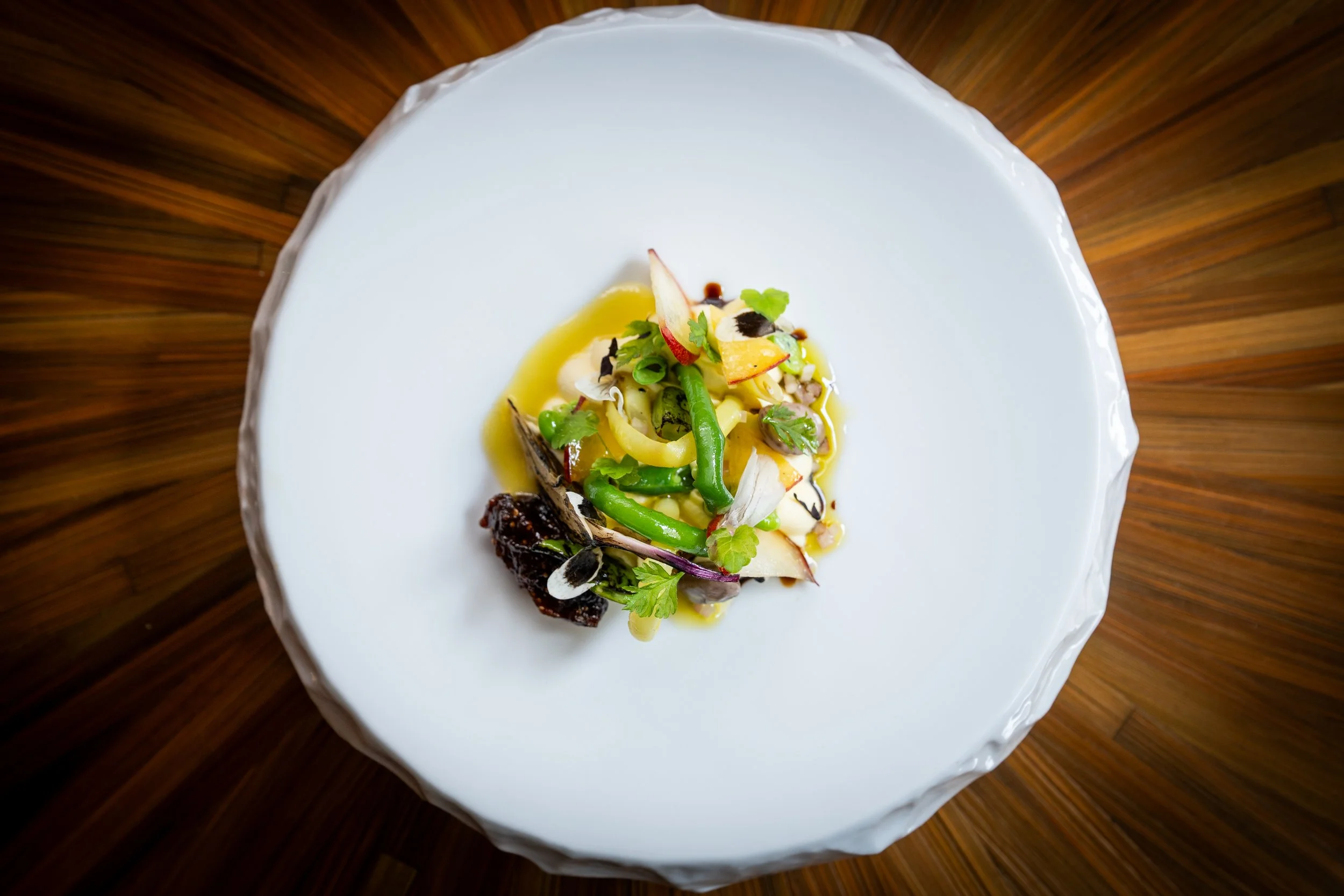
At that level, every element has been thought about. The size of the portion, where the sauce lands, how much negative space is left, whether the garnish adds something or just gets in the way. Even when a dish looks loose or rustic, there is usually a reason it works.
The mistake is thinking that because something looks effortless, it took no effort.
This is not just true in cooking. You see it in art, music, photography and almost any craft where someone has spent years making difficult things look simple. We only see the finished moment, so it is easy to miss the skill, thought and repetition that made it possible.
A plate can look simple and still be incredibly considered. In some ways, that is harder. When there are fewer things on the plate, there is less to hide behind. If the sauce is in the wrong place, you see it. If the garnish looks random, you notice. If everything is sitting in the middle like a tired pile of leftovers, the plate tells you something before the food ever reaches your mouth.
That is the part I think we underestimate.
Food is visual. It always has been. The smell matters, the sound matters, the temperature matters and, of course, the flavour matters. But the eye gets there first.
Trying is not the problem
There is a slightly odd idea in parts of cooking culture that caring about presentation is somehow suspect.
I touched on this in the last article, because I do understand the concern. If you try too hard, maybe you look vain. Maybe you are plating for Instagram. Maybe you seem more interested in how the food photographs than how it eats.
And yes, we have all seen plates that feel designed for a camera but do not make much sense as food. A dish can be technically impressive and still feel a bit cold. A garnish can be beautiful and still have no reason to be there. A plate can look expensive and still leave you wondering whether anyone actually wanted to eat it.
But that does not mean the answer is to stop caring.
For me, plating should not be about decoration. It should be about showing care. If you have taken time over the ingredients, the cooking, the seasoning and the texture, why would you suddenly stop caring at the point where the diner finally meets the dish?
Trying is not the problem. Trying without a reason is the problem.
A messy plate can still be wonderful if the mess feels generous, alive and deliberate. A simple plate can be beautiful if the restraint feels confident. What tends not to work is the middle ground where the food tastes like effort but looks like an afterthought.
That mismatch is what bothers me.
Most people do intend to plate better
The funny thing is, I do not think most people are lazy about plating. I think most cooks want their food to look good.
The problem is that wanting to plate better is not the same as knowing what to do when the food is hot, the sauce is ready, someone is waiting, and you are suddenly staring at a blank plate.
That is when everything goes out of the window.
You might have had a nice idea earlier. You might have saved a few images for inspiration. You might have imagined the dish looking elegant or clean or generous. But when the moment arrives, pressure takes over, and the plate becomes a place to put food rather than a place to design it.
There is also a small social risk in trying. Anyone who has worked in a kitchen, cooked for friends or even plated something carefully at home will know this feeling. You start arranging things with a bit more care, and someone says, “Bit fancy, isn’t it?”
They are probably going to say that anyway.
That sort of banter is part of kitchens, families, friends and teams. It is often healthy. But it can also make people pull back. Nobody wants to look like they are taking themselves too seriously.
I think you might as well make the plate look good while they are taking the mick.
Iteration matters more than talent
Whenever we talk about creativity, we have a habit of making it sound mysterious. Some people are creative. Some people are not. Some people can plate beautifully. Other people just do not have the eye.
I do not think that is true, or at least I do not think it is the most useful way to look at it.
James Dyson famously went through thousands of prototypes before arriving at the vacuum cleaner design that worked. Thousands. Imagine getting to prototype 200 and still being wrong. Imagine getting to prototype 1,700 and only being a bit closer.
Most people would probably stop and say, “Maybe I’m just not a vacuum person.”
But that loop is where the progress happens. Try something, look at it, notice what failed, adjust, and try again.
Plating is not engineering, but the process is more similar than people think. You put something on the plate. You look at it. You notice that the sauce is pulling the eye in the wrong direction, or the garnish looks stuck on, or the food has no height, or the colour has disappeared into the plate. Then next time, you change one thing.
That is how you get better.
Not by waiting for some magical personal style to appear. Not by assuming great plating is a gift. Not by saving hundreds of images and never actually trying to copy, adapt or understand them.
You improve because you stay in the loop for long enough.
The same is true in writing, photography, filmmaking, cooking and almost any creative work I can think of. The final version often looks obvious, but it rarely started that way.
Why I built the Plateist Training Kit
This is a big part of why I created the Plateist Training Kit.
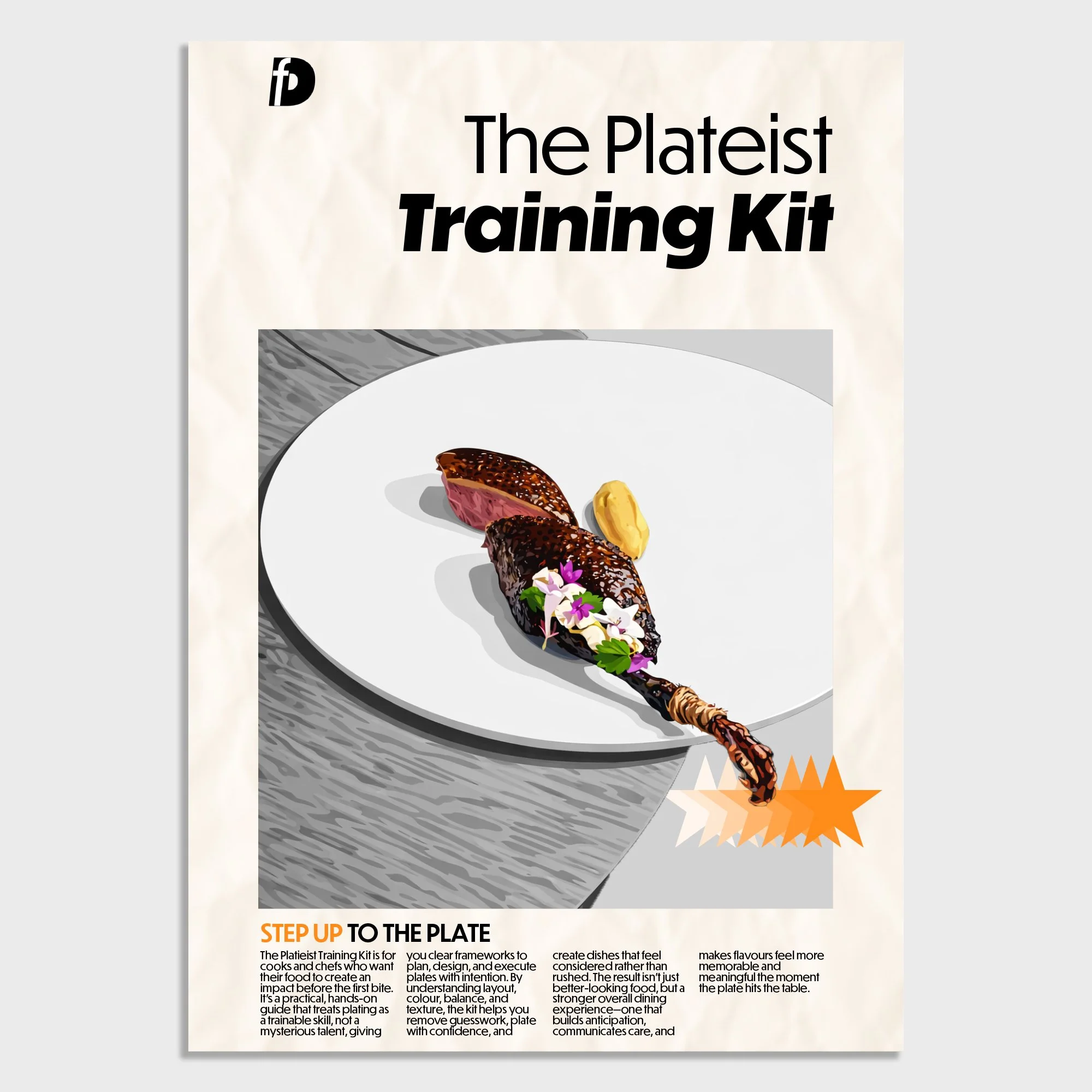
It was not because I think everyone needs to plate like a Michelin-starred chef. Most people do not need that, and most food would be worse if it tried to force itself into that style.
I made it because I kept seeing the same problem. People cared about plating, but when it came to the actual moment of putting food on the plate, they had no process.
So they improvised. Sometimes that works. Often it does not.
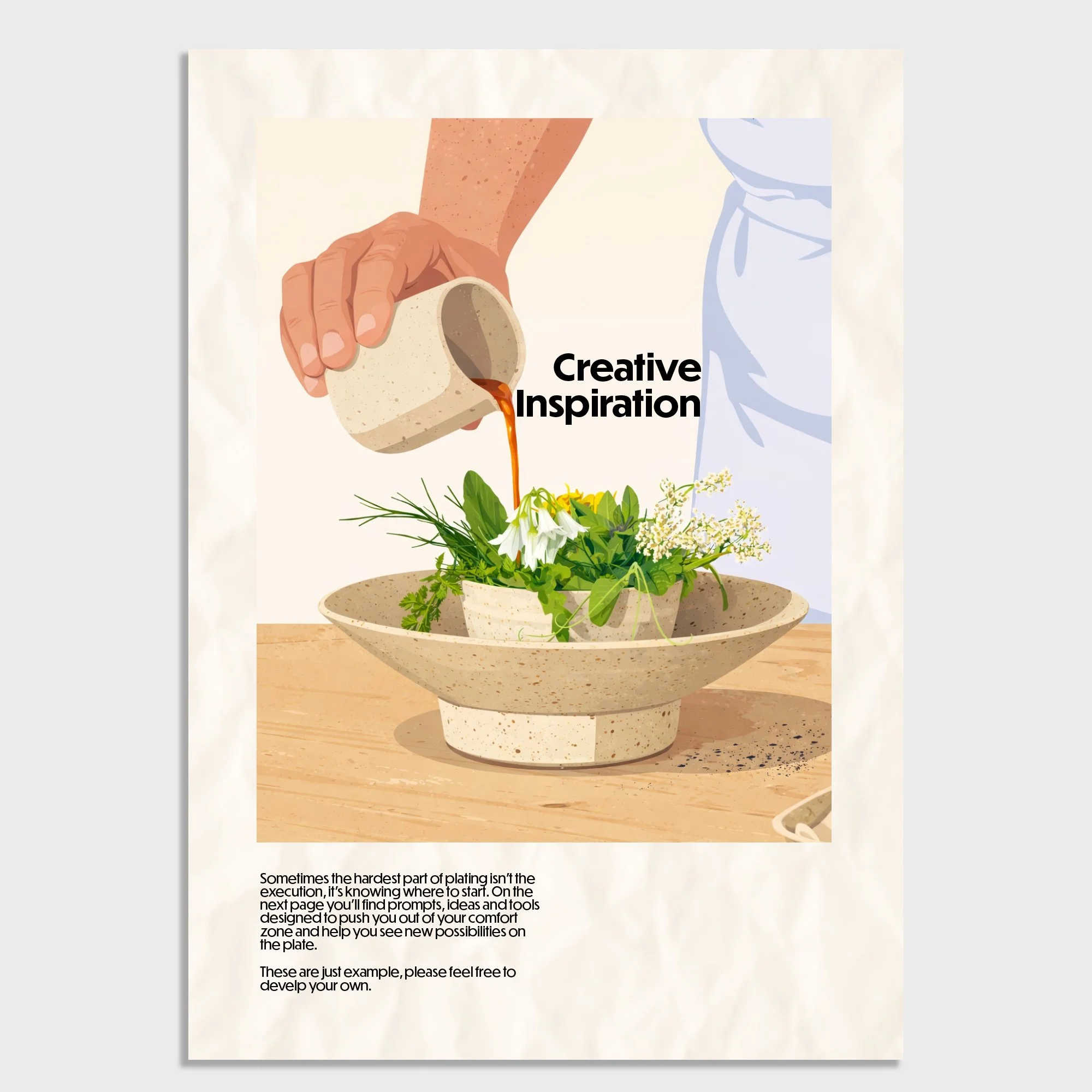
The kit is really just a way to make plating feel trainable. It gives you tools for researching ideas, planning layouts, working with prompts and constraints, and then looking back at your own plates with a more critical eye.
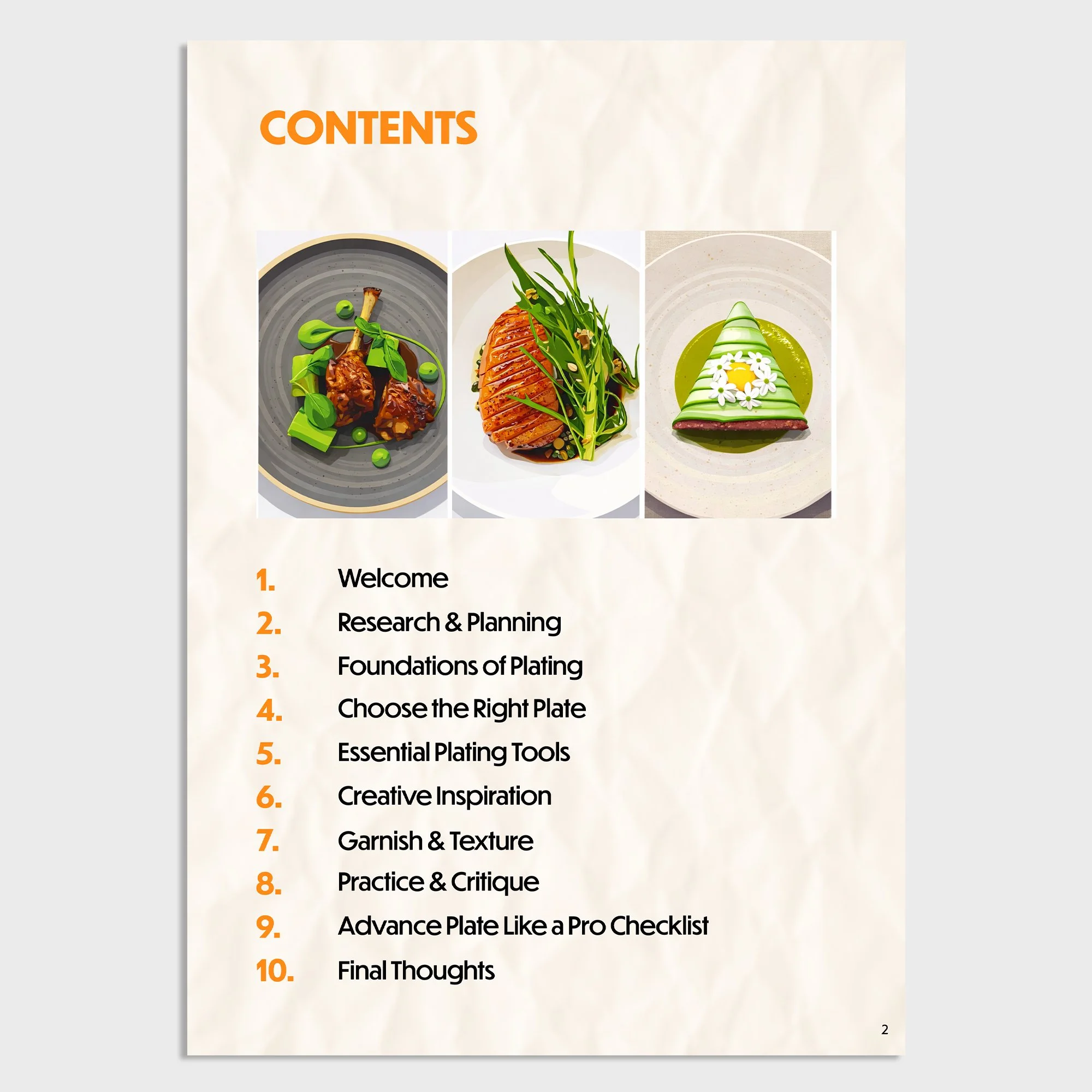
For me, that last part matters most. Plating more food helps, but only if you are learning from it. You need to be able to look at a plate and ask what is working, what is distracting, and what you would change next time.
Once you can do that, you are no longer just hoping your plates improve. You have something to work with.
The plate says something before the food does
For me, this is where it all comes back to the plate.
When food is thrown down without care, the diner feels it. They may not explain it in design language. They may not say the hierarchy is weak, or the sauce placement is distracting, or the garnish has no purpose. They will probably just feel slightly less excited.
The plate has already said, “That’ll do.”
That is a shame when the cooking underneath it is good.
Plating does not need to be fussy. It does not need to be neurotic. It definitely does not need to look like everyone else’s idea of fine dining. But it should feel like the final few seconds mattered.
Because they do matter.
They are the bridge between the work in the kitchen and the experience at the table. They are where flavour, effort and expectation meet. If the plate looks careless, it can make the whole dish feel less considered, even when the food itself is delicious.
That is why sloppy plating can ruin good cooking. Not because the food tastes worse in a technical sense, but because it feels worse before anyone has even tasted it.
And that is what I keep coming back to.
A plate does not have to shout. It does not have to be perfect. It does not have to prove how clever the cook is.
But it should feel like someone cared.
That, for me, is when plating stops being decoration and starts becoming design.